Nutrition education, built for the people who teach it.
An educator-first strategy, editorial framework, content system and measurement practice for a nonprofit helping children investigate food marketing and make informed choices.
- Partnership
- Began May 2025
- My role
- Strategy · Guidelines · Content · Paid growth
- Primary audience
- Teachers + educators
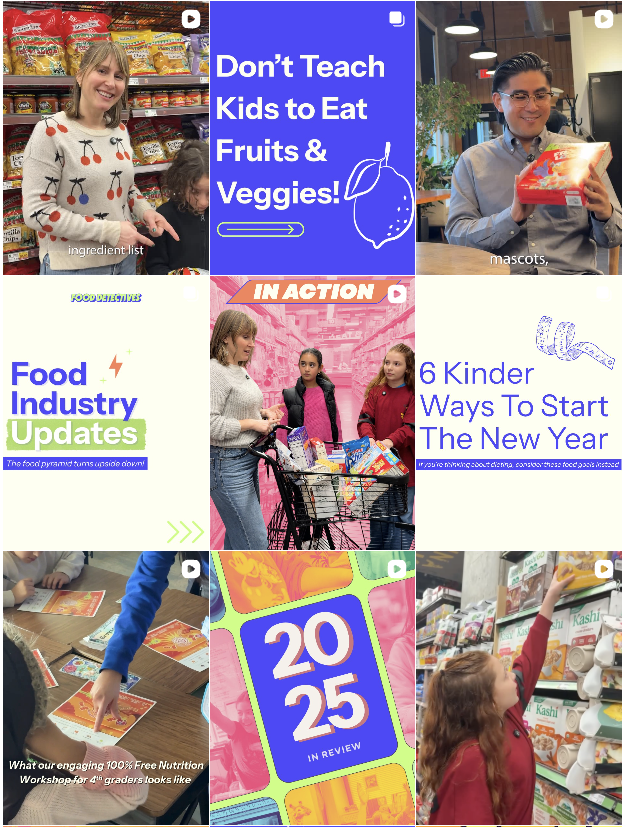
A niche audience was the point.
Food Detectives did not need a viral feed. It needed a trusted one: a place where teachers and caregivers could find credible ideas, understand the program and confidently bring food literacy into a classroom or family conversation.
Serve educators first
Build for teachers who need credible, classroom-ready ideas—not a broad audience that only scrolls past them.
Protect the nuance
Translate nutrition science without fear hooks, moralizing food or flattening a complex topic into a slogan.
Make learning participatory
Turn food literacy into questions, investigations and experiments that help children practice making informed choices.
Optimize for quality
Use paid distribution and reporting to reach the right people, then redirect spend when channel quality falls short.
Audience architecture before content production.
The strategy began by clarifying who each message was for and what action it should support. Teachers became the core growth audience; caregivers extended learning at home; partners and funders needed visible proof that the educational model was credible and active.
Editorial guidelines that protect the mission.
Children’s nutrition content carries real responsibility. The voice had to be warm enough to invite participation and rigorous enough to avoid shame, fear or oversimplification.
Curiosity over fear
Open with a useful question or observable clue. The goal is confidence and critical thinking, never anxiety around food.
Choice without judgment
Avoid good-food/bad-food binaries, purity language and body-transformation framing. Give families context they can use.
Evidence with a human voice
Keep the science intact while writing for busy educators, caregivers and students who need clarity rather than jargon.
Access shapes choice
Healthy food is not equally accessible. Acknowledge cost, geography, time, culture and household constraints, then offer realistic options without shame or oversimplification.
A curriculum-minded content system.
The feed moved from isolated posts to a repeatable editorial mix. Each pillar connected a social format to a learning or trust-building purpose, making the calendar easier to plan and the account easier to recognize.
- 01
Food literacy
Ingredient lists, label reading and the marketing clues hiding in plain sight.
- 02
In action
Real workshops and classroom moments that show the curriculum working.
- 03
Teacher tools
Saveable explainers, seasonal prompts and practical activities educators can use.
- 04
Expert context
Interviews and research-led posts that deepen credibility without losing accessibility.
- 05
Child-led discovery
Questions, challenges and demonstrations that put young people in the investigator role.
- 06
Program proof
Stories, testimonials and outcomes that connect social content to the nonprofit’s larger impact.
From mixed messages to a coherent learning environment.
The visual shift was not decoration. Clearer hierarchy, recurring formats and a more deliberate content mix made the educational value legible before someone read the caption.
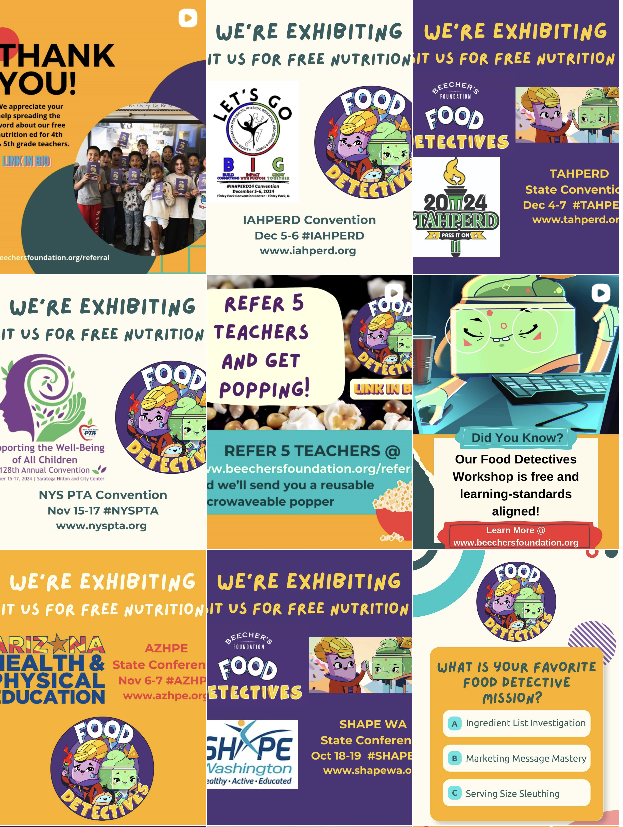
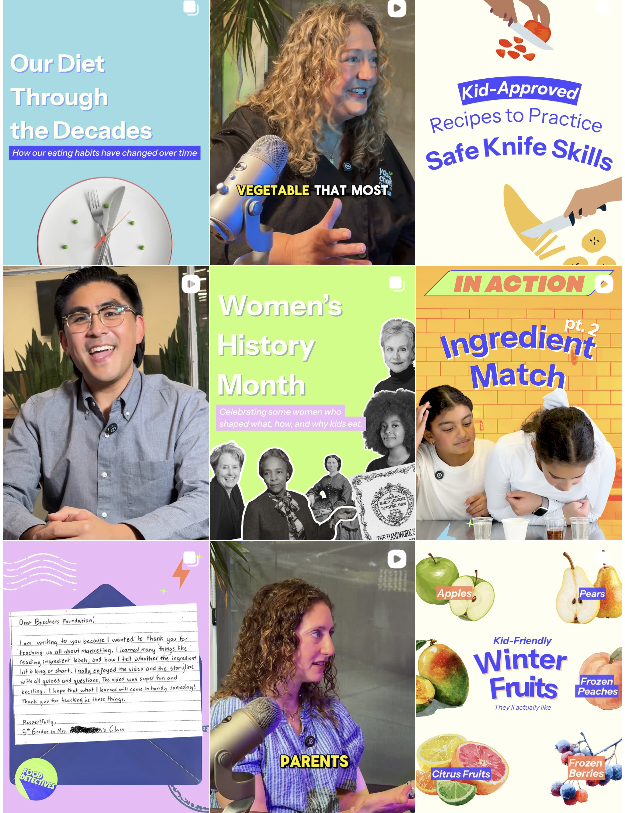
A measured growth practice, not a posting habit.
Content was supported with weekly boosting and a monthly reporting rhythm. Performance informed the next calendar, the next creative direction and where paid spend should—or should not—continue.
Plan
Set the monthly learning themes, audience objective, formats and distribution plan before production begins.
Publish + boost
Run the editorial calendar and add weekly paid support where it can extend qualified reach.
Read the signal
Track follower growth, reach, saves, shares, profile actions and audience quality—not just visible engagement.
Reallocate
Carry the findings into the next cycle, scaling what attracts educators and cutting spend that does not.
The outcome was relevance at scale.
The work created a clearer nonprofit voice, a repeatable editorial system and a steadily growing community aligned with the mission. Success meant reaching teachers who could use the work—not chasing a momentary spike that disappeared the next day.
See Food Detectives on Instagram- Qualified educator audience growth
- Research-led editorial guidelines
- Consistent visual + content architecture
- Weekly paid optimization
- Monthly measurement + iteration